Skip to content
EVOHN

About

Documented at every step

EVOHN began with a documentation problem rather than a chemical one. Material arrived from multiple suppliers with analytical records that could not be read against one another, and nothing reliably tied a vial in the freezer to the analysis that released it. The first work was not synthesis — it was the specification, written before any batch existed, that every release has been judged against since.

Purity specification
≥ 99%
Batches independently analysed
100%
Accredited laboratories engaged
2
Batches re-graded to fit a result
0

Our mission

Make quality something you can check

EVOHN exists because the research compound market asks to be trusted rather than inspected. Purity is asserted rather than demonstrated. Certificates arrive on request, eventually, and often for an adjacent batch. Documentation is treated as an obstacle to a sale rather than as the product of the work.

We built the opposite arrangement. Every batch is analysed by a laboratory outside our supply chain, against a specification written before the batch existed. Every certificate is published as a matter of course rather than disclosed on demand. Every vial carries the batch identifier that ties it to the analysis that released it.

None of that is generous. It is the minimum standard for material intended to produce results that someone will later have to defend.

EVOHN pre-filled injection pen under studio light

What we hold to

Four positions, held in public

Each of these costs us something. That is generally how you can tell a position from a slogan.

01

Verification over assertion

A claim we make about our own material is not evidence. We commission analysis from parties with nothing to gain from the answer, and we publish what comes back — including the batches that took a second attempt to release.

02

Traceability is not optional

A result is only defensible if it can be tied to the material that produced it. Batch identifiers appear on the vial, the certificate and the retained sample, and they never diverge.

03

Reject rather than re-grade

A batch either meets the specification agreed before synthesis or it does not. There is no intermediate category. Intermediate categories are where standards erode quietly.

04

Precision in language

We describe compounds as the published literature characterises them. We do not make therapeutic claims, and we do not translate a mechanism into a promise. The distinction matters more here than the marketing costs us.

Facilities

Where the work happens

Synthesis, lyophilisation and analysis are contracted rather than owned. That is a deliberate structure: it keeps the party that makes the material separate from the party that judges it.

Synthesis and purification — Contracted, European Union
01Manufacture

Synthesis and purification

Contracted, European Union

Solid-phase synthesis under a written specification, with preparative chromatography sized so that purity is never traded against yield. Coupling is monitored throughout; incomplete couplings are the origin of the deletion sequences identity testing later has to catch.

Lyophilisation and fill — Contracted, European Union
02Presentation

Lyophilisation and fill

Contracted, European Union

Freeze-drying cycles developed per compound rather than applied generically, targeting a cake with sufficient structure to reconstitute cleanly and low enough residual moisture to remain stable. Fill into amber borosilicate with butyl closure and aluminium crimp.

Independent analysis — Accredited laboratories, EU and US
03Verification

Independent analysis

Accredited laboratories, EU and US

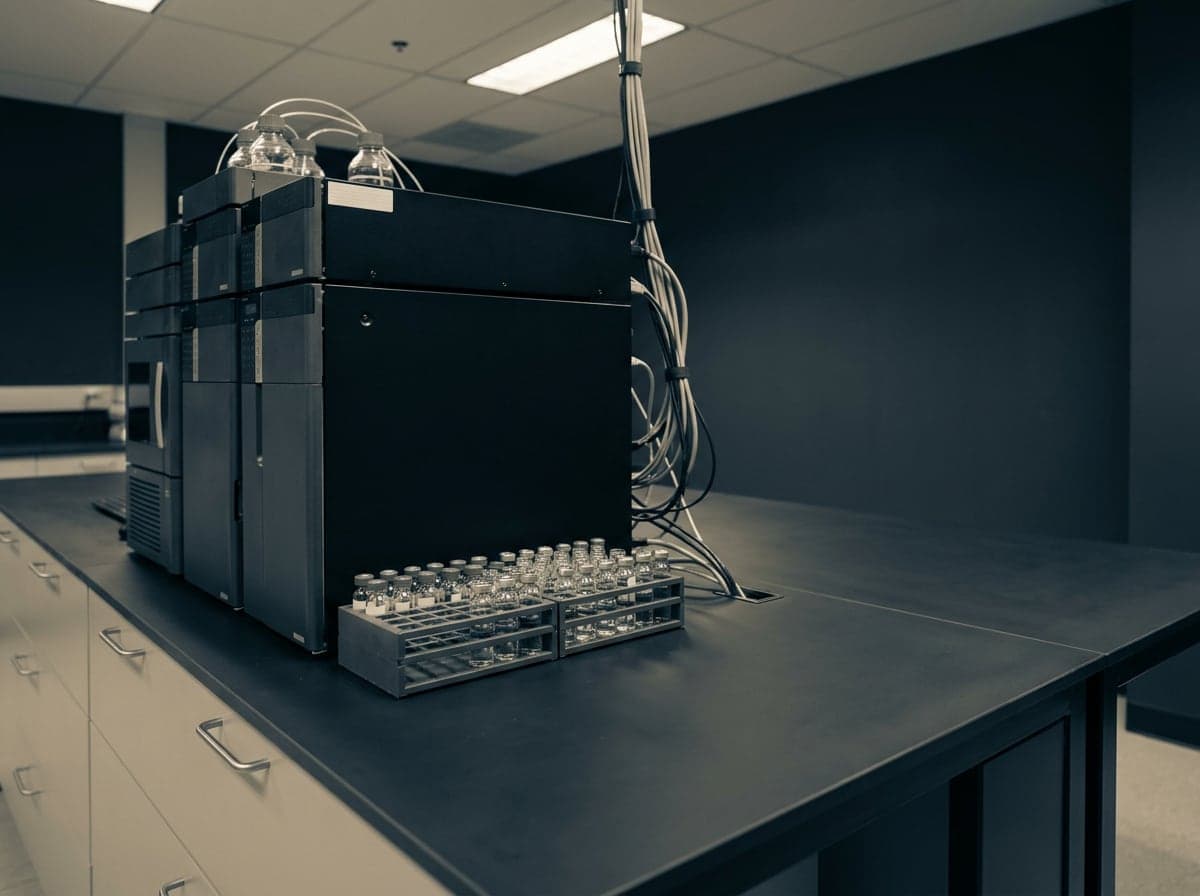
Two ISO/IEC 17025 accredited laboratories outside the supply chain, engaged so that no single analytical relationship becomes load-bearing. Each report carries an accession number retrievable from the issuing laboratory directly.

Cold storage and dispatch — Texas, USA
04Custody

Cold storage and dispatch

Texas, USA

Temperature-controlled storage with retained samples held under the same conditions as released material for the duration of the retest interval. Insulated cold-chain dispatch with in-transit indicators.

Accountability

How the standard is held

A standard that depends on who is on shift is not a standard. These are the structural arrangements that decide whether a batch is released.

01

Release is separated from manufacture

The decision to release a batch does not sit with the facility that produced it. In-process testing informs manufacturing; it does not release material. The separation is structural rather than procedural, which is why it holds when a schedule is under pressure.

02

The specification precedes the batch

Acceptance criteria are fixed in writing before synthesis begins. A batch is judged against the document that existed when it was ordered, so criteria cannot be fitted to a result after the fact.

03

Analysis is commissioned outside the supply chain

Certificates are issued by accredited laboratories with no commercial interest in the outcome, and each report carries an accession number retrievable from the issuing laboratory directly rather than from us.

Vision

A market that explains itself

The research compound market is opaque because opacity is profitable. It stops being profitable the moment enough suppliers publish enough documentation that a buyer can compare one against another. We would rather compete on that basis than on the strength of a claim, and we publish accordingly.

Enquiries

Ask us something specific.

Questions about a batch, a method, a facility or a supply arrangement are answered by the person responsible for it.