Soft-tissue repair is often described as though it were a single process with a single rate. It is not. It is a sequence, and the compounds most studied in the field each act at a different point in that sequence — which is why comparative work rarely examines one without reference to the others.
Stage one: vascular supply
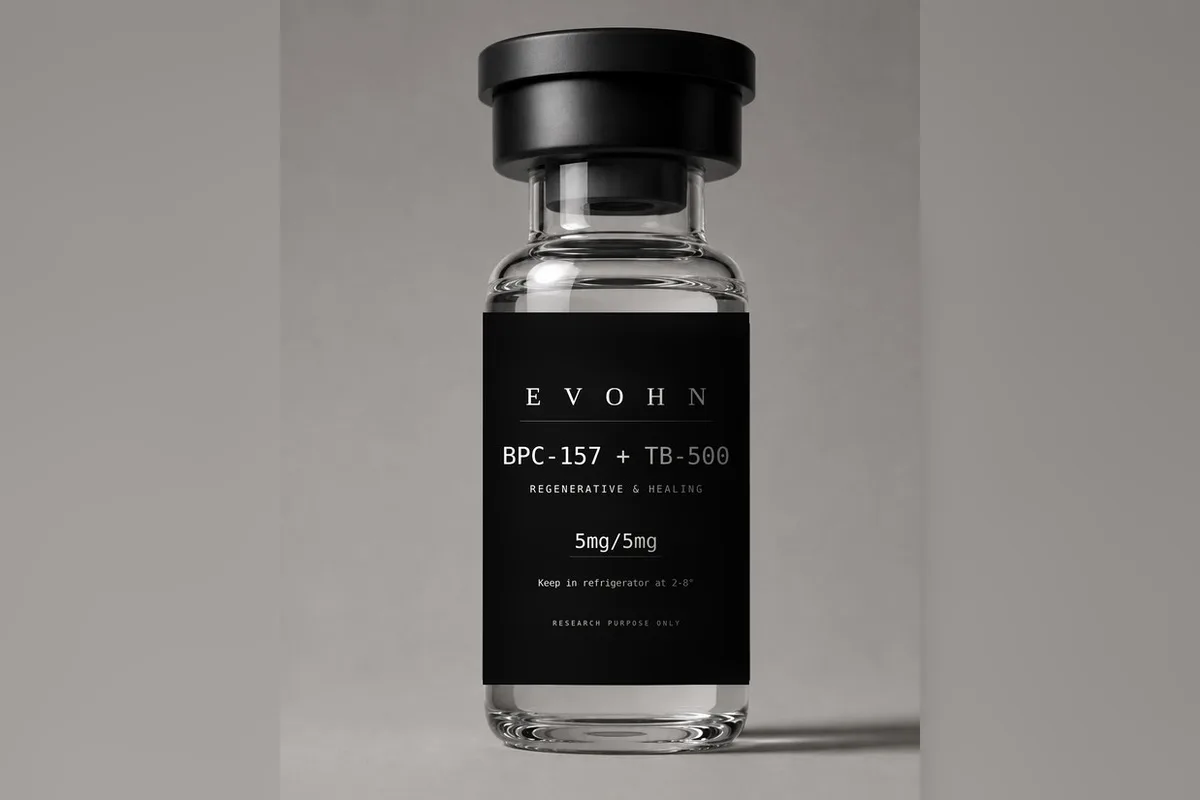
Nothing repairs without perfusion. BPC-157 is characterised in the preclinical literature as acting on the VEGFR2-Akt-eNOS axis, with associated modulation of the nitric oxide system. Work on focal adhesion kinase and paxillin is examined as the basis for the fibroblast behaviour reported in tendon and ligament preparations.
Stage two: cellular mobilisation
Cells reach the site by migrating, and migration is a cytoskeletal problem. TB-500 corresponds to thymosin beta-4, whose actin-binding domain sequesters monomeric G-actin and shifts the polymerisation equilibrium that governs motility. Downstream literature examines endothelial tube formation and laminin-5 upregulation as consequences.
Stage three: what gets deposited
Migrated fibroblasts synthesise matrix, and the composition of that matrix determines the mechanical character of the result. GHK-Cu is described as a physiological copper carrier that exchanges Cu(II) with albumin and delivers it to cells, with reported modulation of several hundred genes in fibroblast models — particularly the balance between matrix metalloproteinases and their tissue inhibitors.
The comparative question
The value of examining the three together is not additive potency. It is attribution: knowing which stage a change occurred at. A design that combines all three from the first time point produces a result that is difficult to assign, and the published literature reflects that constraint in how it is structured.