Degradation is not one process. It is four, with different chemistry, different triggers and different countermeasures. Handling advice that treats all peptides identically is handling advice that protects against the average threat and the specific one badly.
Hydrolysis
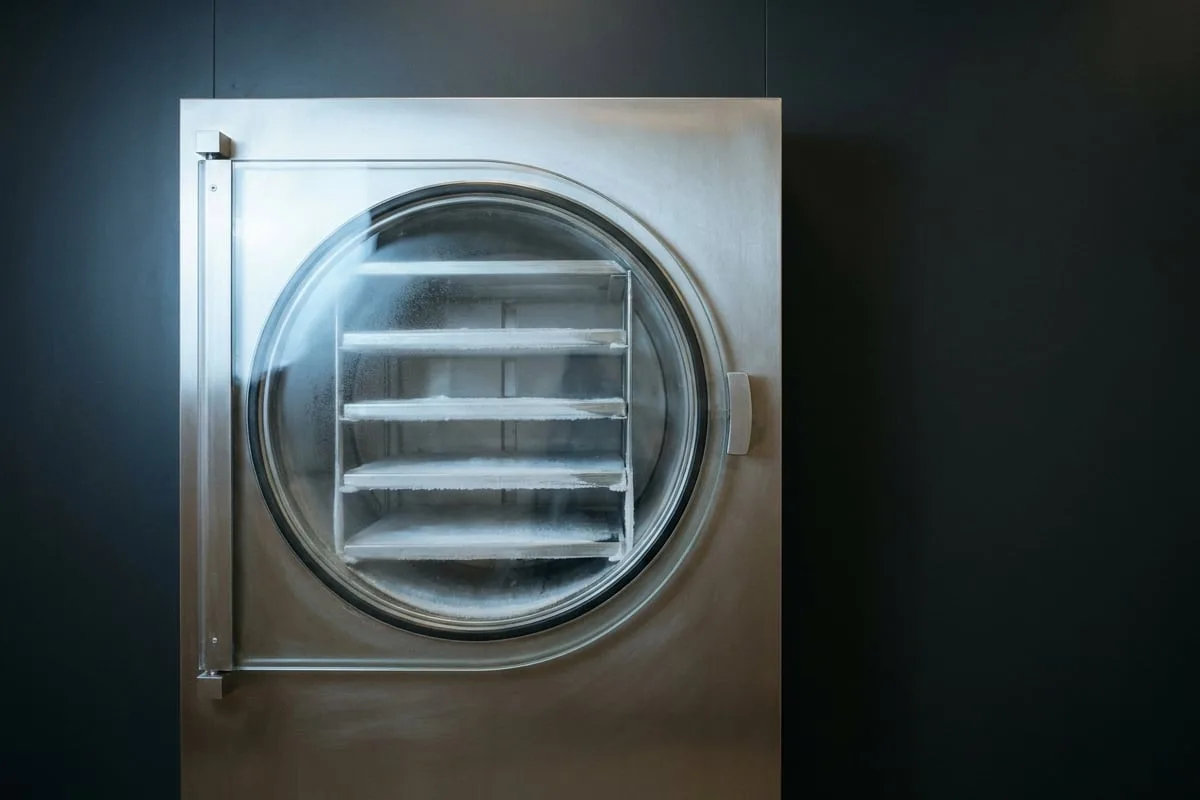
Cleavage of the peptide backbone by water. It is accelerated by temperature and by pH excursion in either direction, and it is the reason lyophilised storage exists. Countermeasure: keep water out. Once in solution, keep it cold and keep the pH near neutral unless the compound documents otherwise.
Oxidation
Methionine, cysteine and tryptophan residues are susceptible to attack by dissolved oxygen, accelerated by light and by trace metal ions. Compounds carrying a metal centre — copper complexes in particular — have an additional and more consequential exposure. Countermeasure: minimise headspace, work in subdued light, avoid contact with reducing agents and chelators.
Deamidation
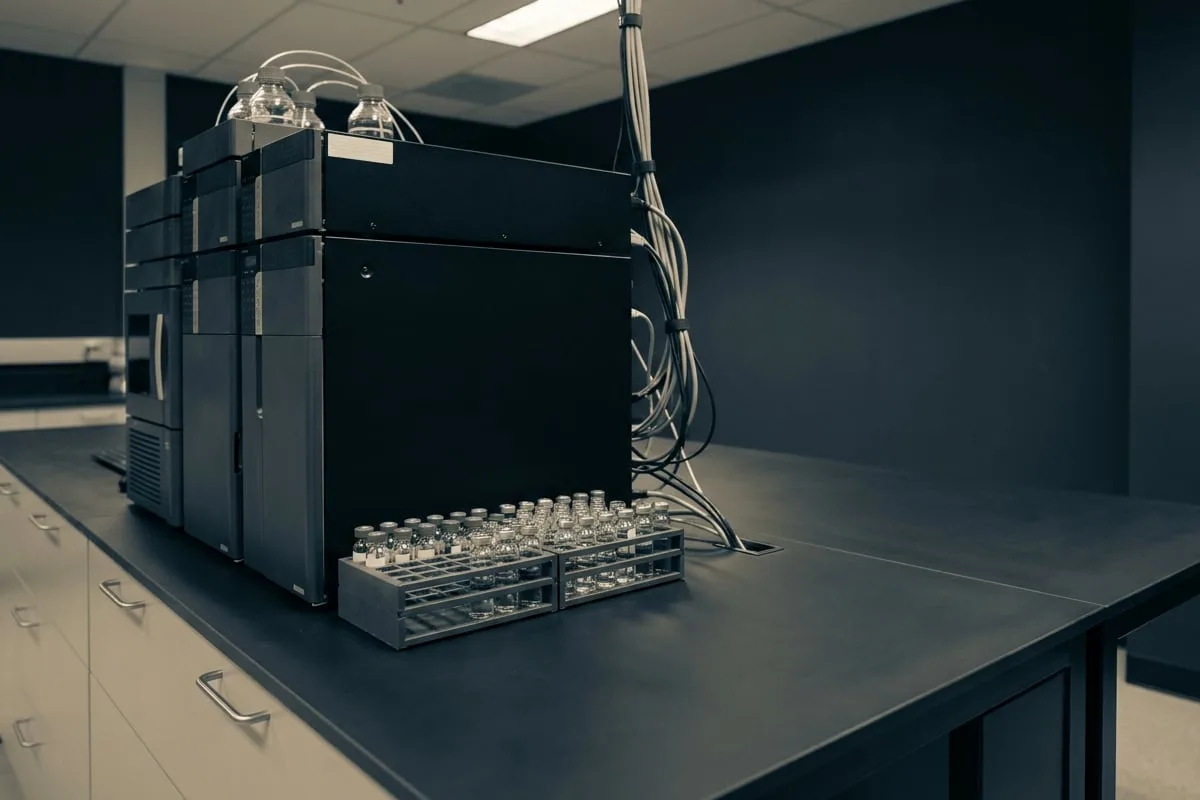
Asparagine and glutamine residues convert to their acidic counterparts through a cyclic intermediate. The result is a molecule one dalton heavier with an altered charge state, which frequently shifts retention and can present as a shoulder on a chromatogram. It is strongly pH-dependent and is one of the quiet reasons diluent choice should be recorded.
Aggregation
Not a chemical change but a physical one: individual molecules associate into higher-order structures. It is driven by concentration, by agitation, and above all by exposure at an air-liquid interface. This is the mechanism behind the standing instruction to swirl rather than shake — foam is aggregation happening where you can see it.
What temperature actually buys
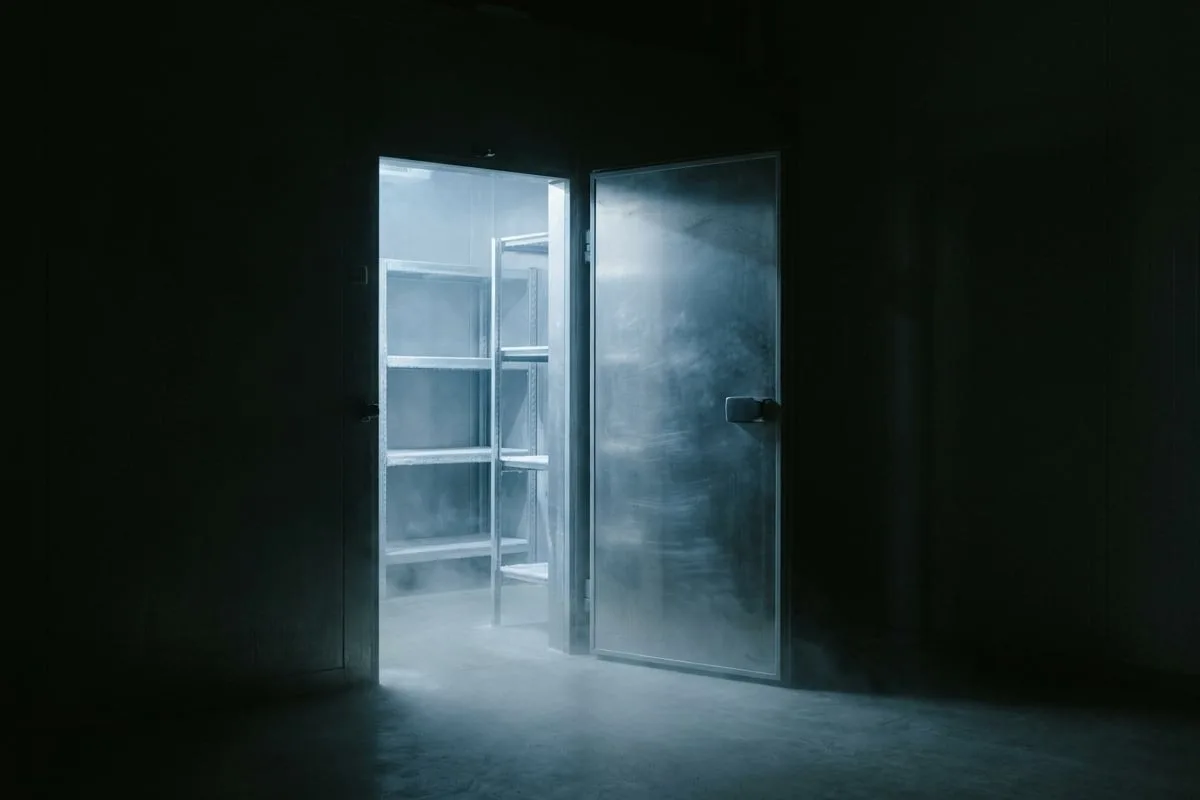
Reaction rates fall roughly exponentially with temperature. The step from ambient to 2–8 °C is significant; the step from 2–8 °C to −20 °C is larger still. That is the entire argument for cold chain: not that warmth destroys material immediately, but that every degree compresses the window in which a result remains reproducible.