Compound Profiles7 min read
Mitochondrial-Derived Peptides and the Retrograde Signal
A small class of peptides encoded in the mitochondrial genome appears to carry information from the organelle back to the nucleus.
Read entryStack 03
Redox cofactor availability studied alongside mitochondrial energy signalling.
What this grouping is
Cellular ageing research keeps returning to the same pair of variables: how much NAD+ is available to the enzymes that consume it, and how the cell reports its own energy state. This grouping places a cofactor and a signalling peptide side by side so that supply and signal can be examined together.
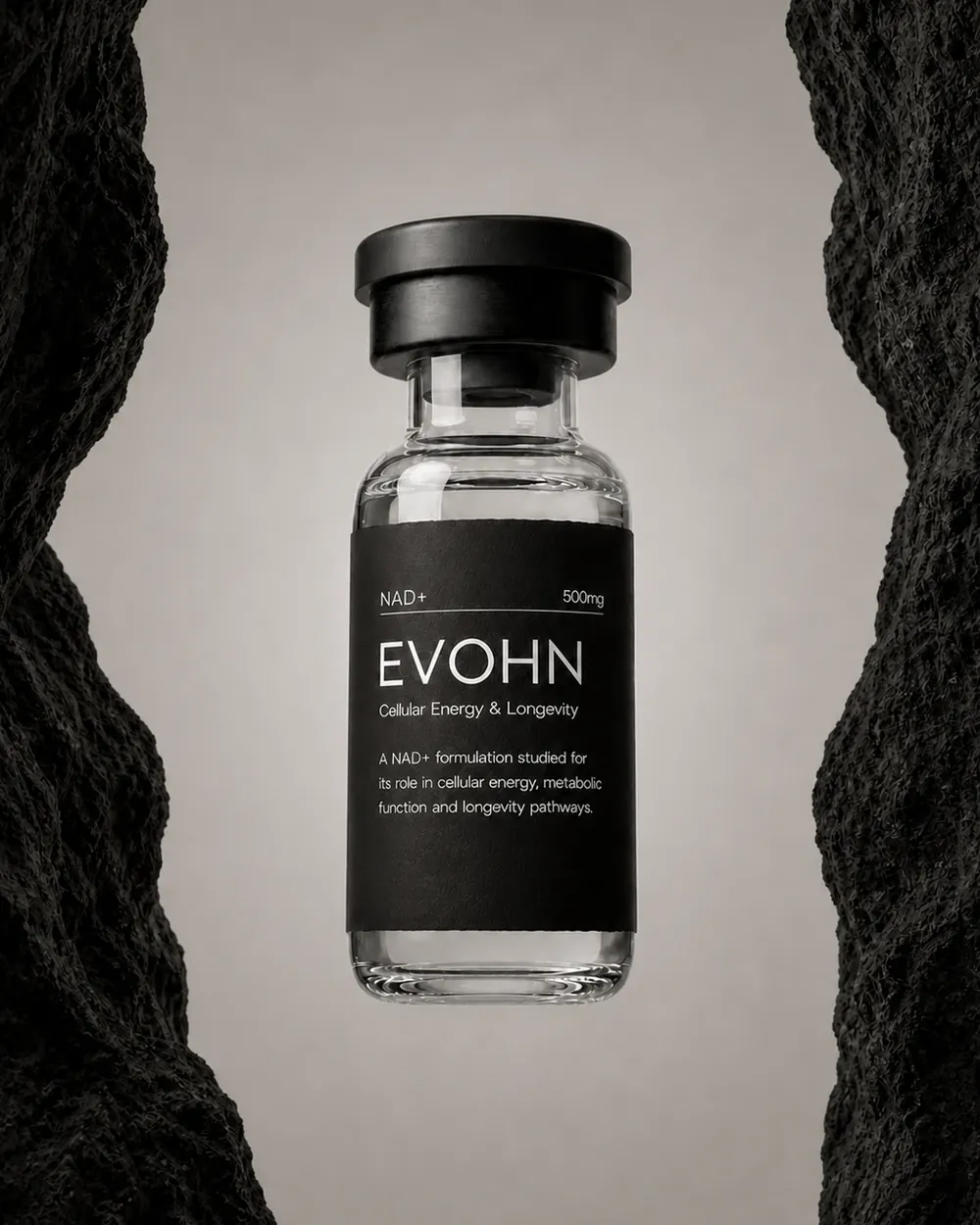
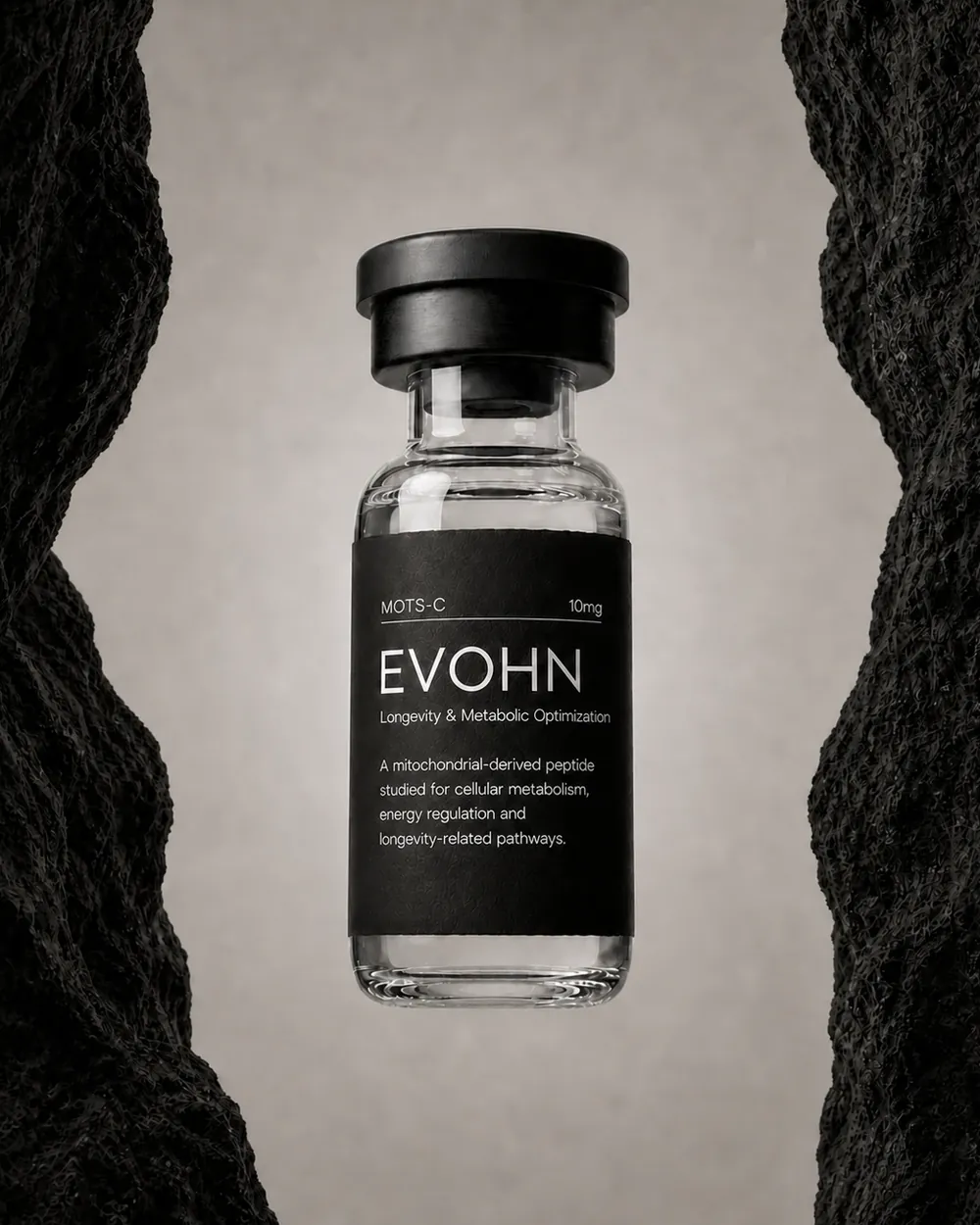
NAD+ is not a modulator — it is a substrate, consumed by sirtuins, PARPs and CD38. MOTS-c is a signal. Confusing the two is one of the more common errors in the literature, and studying them together makes the distinction unavoidable.
To separate cofactor availability from energy-state signalling in models of cellular ageing and mitochondrial capacity.
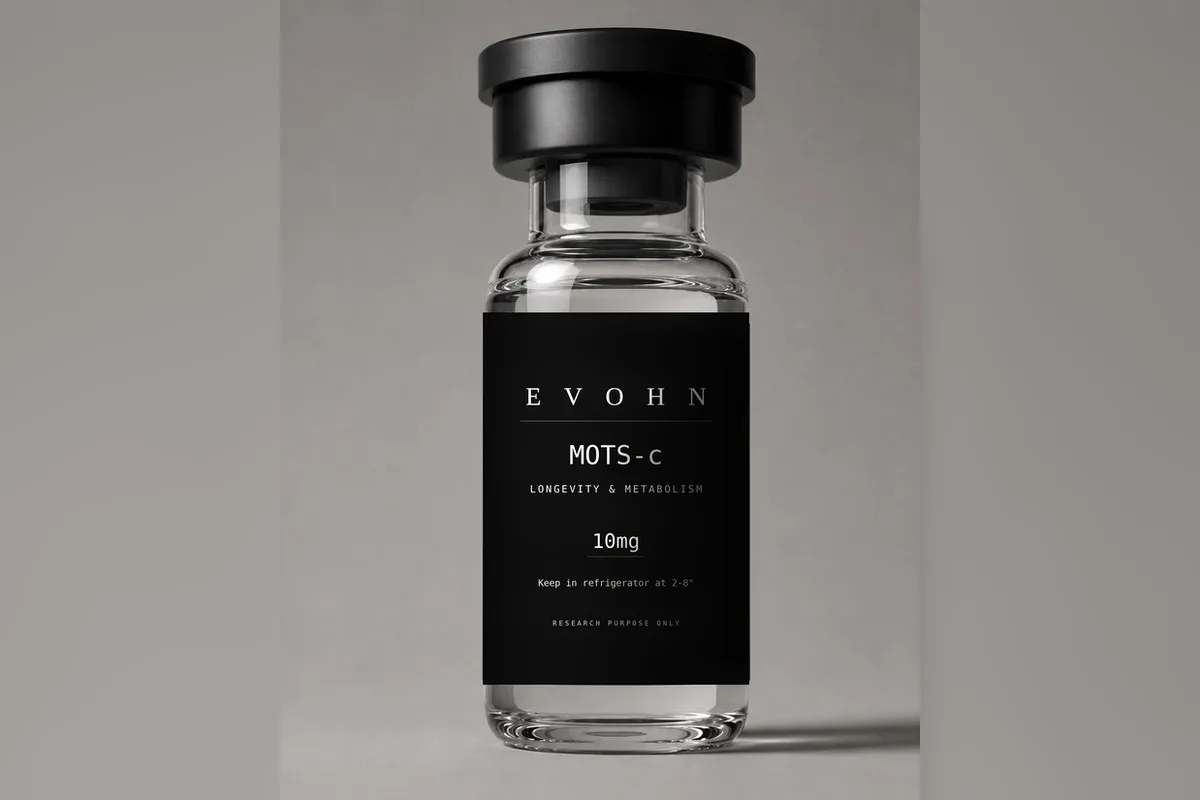
02 independently certified vials
Each component carries its own batch number and its own certificate of analysis. A stack result is only traceable if every batch identifier is recorded.
NAD+ functions as an obligate electron acceptor in catabolic oxidation and as the substrate consumed by NAD-dependent enzymes; the free pool available for oxidative phosphorylation is set by the balance between salvage-pathway synthesis and consumption by PARPs, sirtuins and CD38. MOTS-c, by contrast, is a signalling peptide encoded in the mitochondrial genome, characterised as activating AMPK through folate-cycle inhibition and AICAR accumulation. One is the currency; the other is the message about how much currency remains.
How the set is handled
A description of laboratory practice as the published record reports it. Nothing here is administration guidance, and none of it should be read as such.
Every component is supplied lyophilised and is stored independently at −20 °C, protected from light and moisture. Components are not pre-mixed: each vial carries its own batch number and its own certificate of analysis, and each is reconstituted separately. Once in solution, hold at 2–8 °C and observe the interval stated on the batch certificate for that specific component — the shortest interval in the group governs the group.
Storage & handling guideFurther reading
About this grouping
This catalogue is presented for informational purposes only. It is not an offer of sale, and it makes no medical or therapeutic claim.
Enquiries
Ask a specialist about the Longevity Protocol — component batches, current documentation, and what can be supplied to your territory.