Weight Loss / GLP-1
Retatrutide
A triple receptor agonist studied across GIP, GLP-1 and glucagon signalling pathways.
- Research domain
- Weight Loss
- Presentation
- 10 mg / vial
- Assayed purity
- 99.38%
- Evidence base
- Emerging
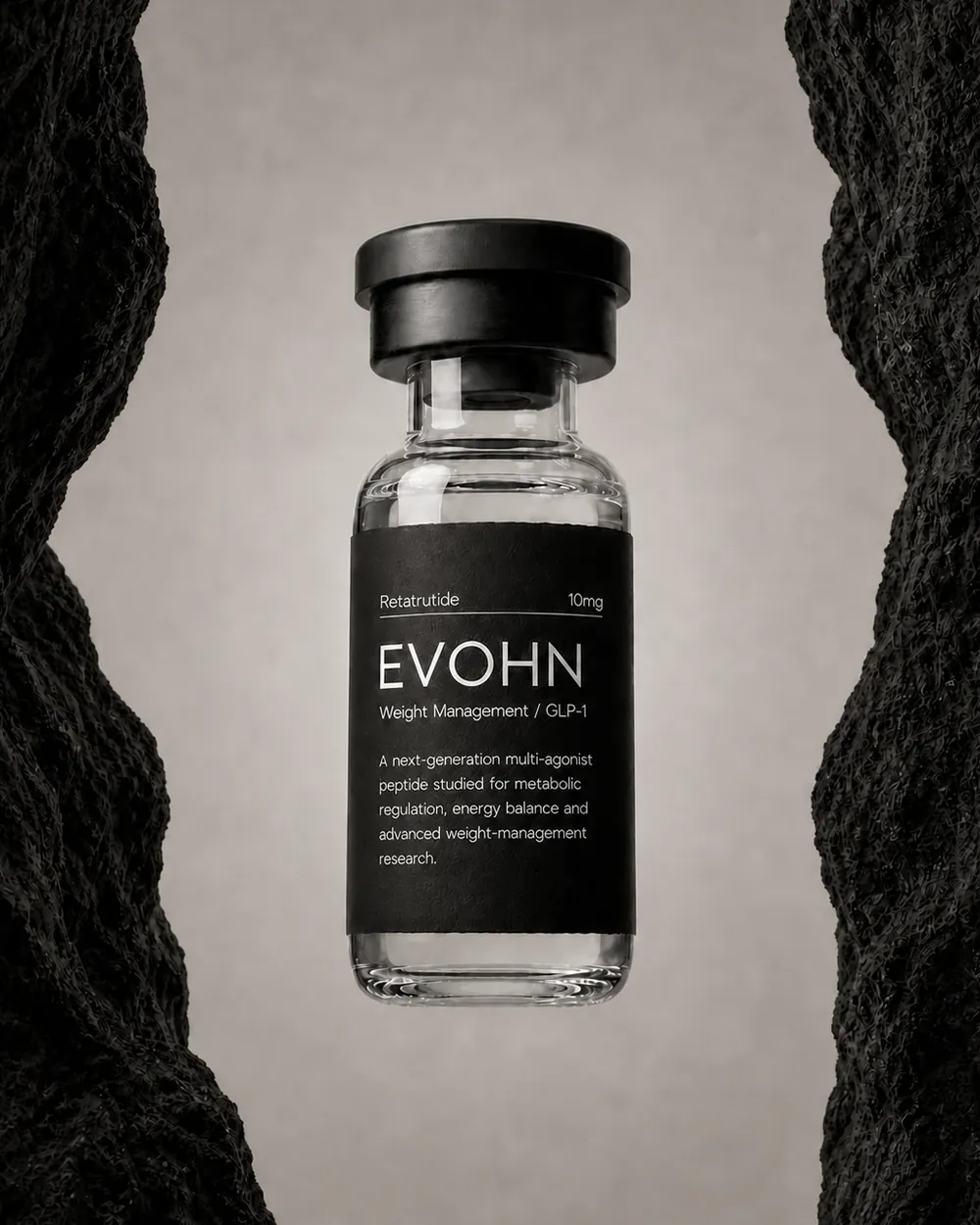
Also designatedTriple agonist · LY3437943 · Reta · GLP-1 triagonist
Quick facts
- Purity specification
- ≥ 99% by HPLC
- Physical form
- Lyophilised powder
- Presentation
- 10 mg / vial
- Evidence base
- Emerging
- Intended use
- Laboratory research only
Current batch · EVN-RETA-2605
Northgate Bioanalytical, 14 May 2026. Assayed content 9.87 mg / 10 mg.
View certificateResearch overview
How it is characterised
Retatrutide is a synthetic peptide characterised in the literature as a single molecule with agonist activity at three distinct receptors: glucose-dependent insulinotropic polypeptide, glucagon-like peptide-1, and glucagon. The triple-agonist architecture is studied for the way concurrent glucagon receptor engagement modifies energy expenditure signalling relative to dual and single agonists.
Mechanism
Characterised as engaging GIPR, GLP-1R and GCGR from one backbone. The glucagon arm is examined for hepatic effects on lipid handling and for its contribution to energy expenditure, which distinguishes the pharmacology from incretin-only agonists that act principally on insulin secretion and appetite pathways.
Applications
- Multi-receptor mechanism research
- Energy expenditure model characterisation
- Comparative agonist profiling
- Preclinical metabolic investigation
Research focus
Areas of published investigation
The following describe where this compound has been examined in the scientific literature. They are not claims of effect, and nothing here should be read as a therapeutic indication.
- 01Triple receptor agonism
- 02Glucagon receptor contribution to energy signalling
- 03Comparative incretin pharmacology
- 04Hepatic lipid metabolism pathways
Research compatibility
Frequently co-studied
Compounds that appear alongside Retatrutide in the published record, and the reason the literature examines them together.
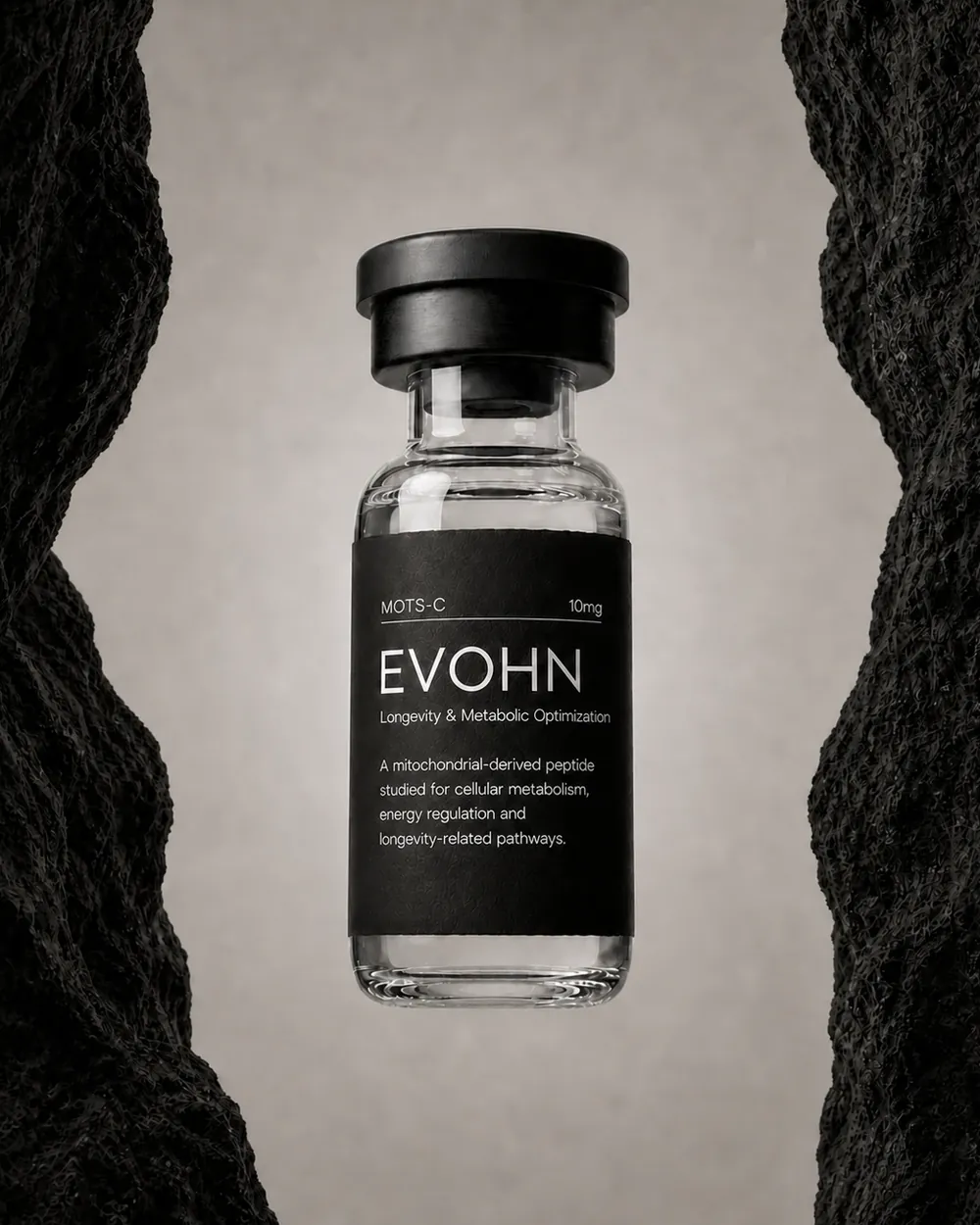
- MOTS-cExamined alongside mitochondrial peptides where substrate utilisation is the endpoint.
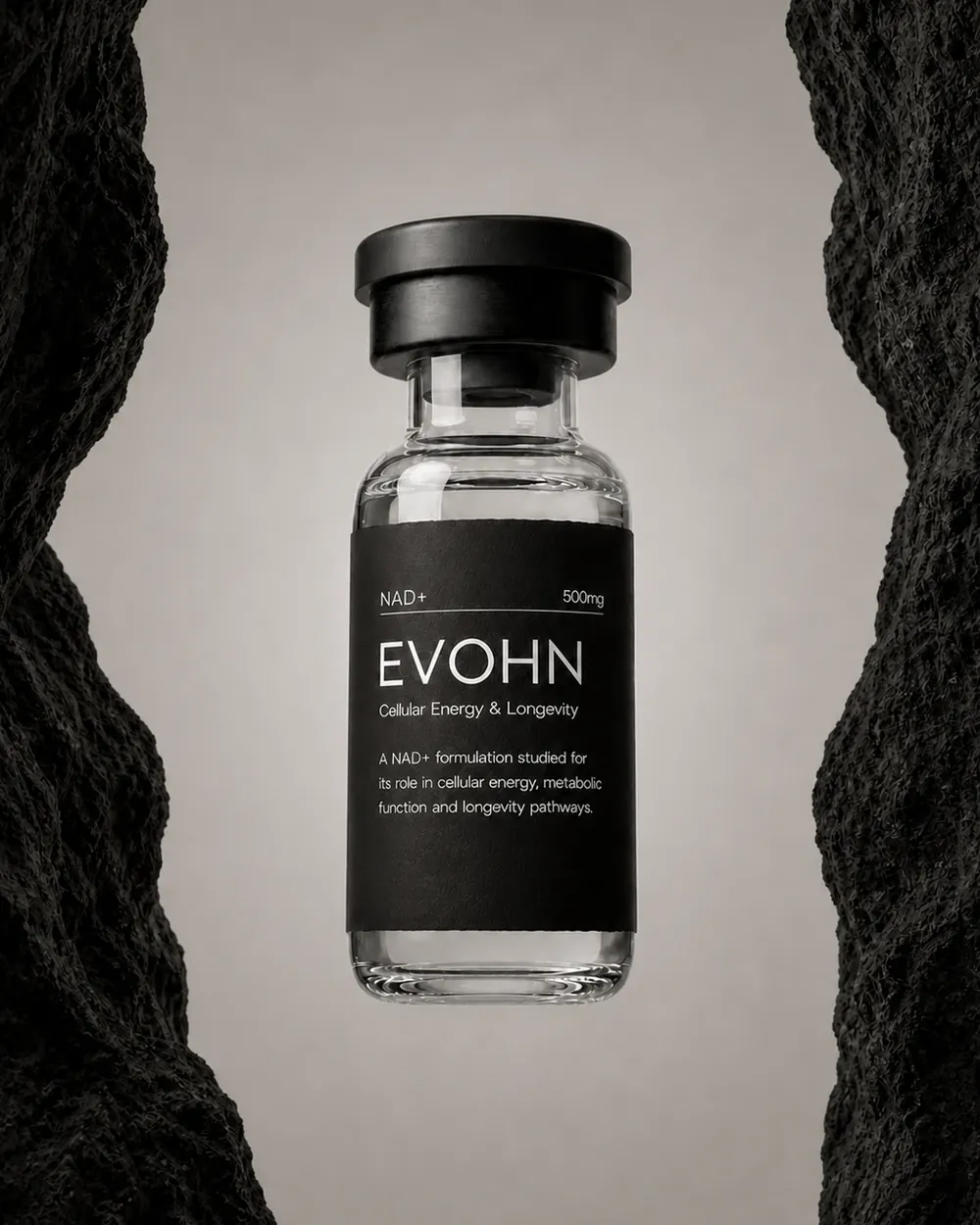
- NAD+Co-studied where hepatic energy metabolism and redox state are examined together.
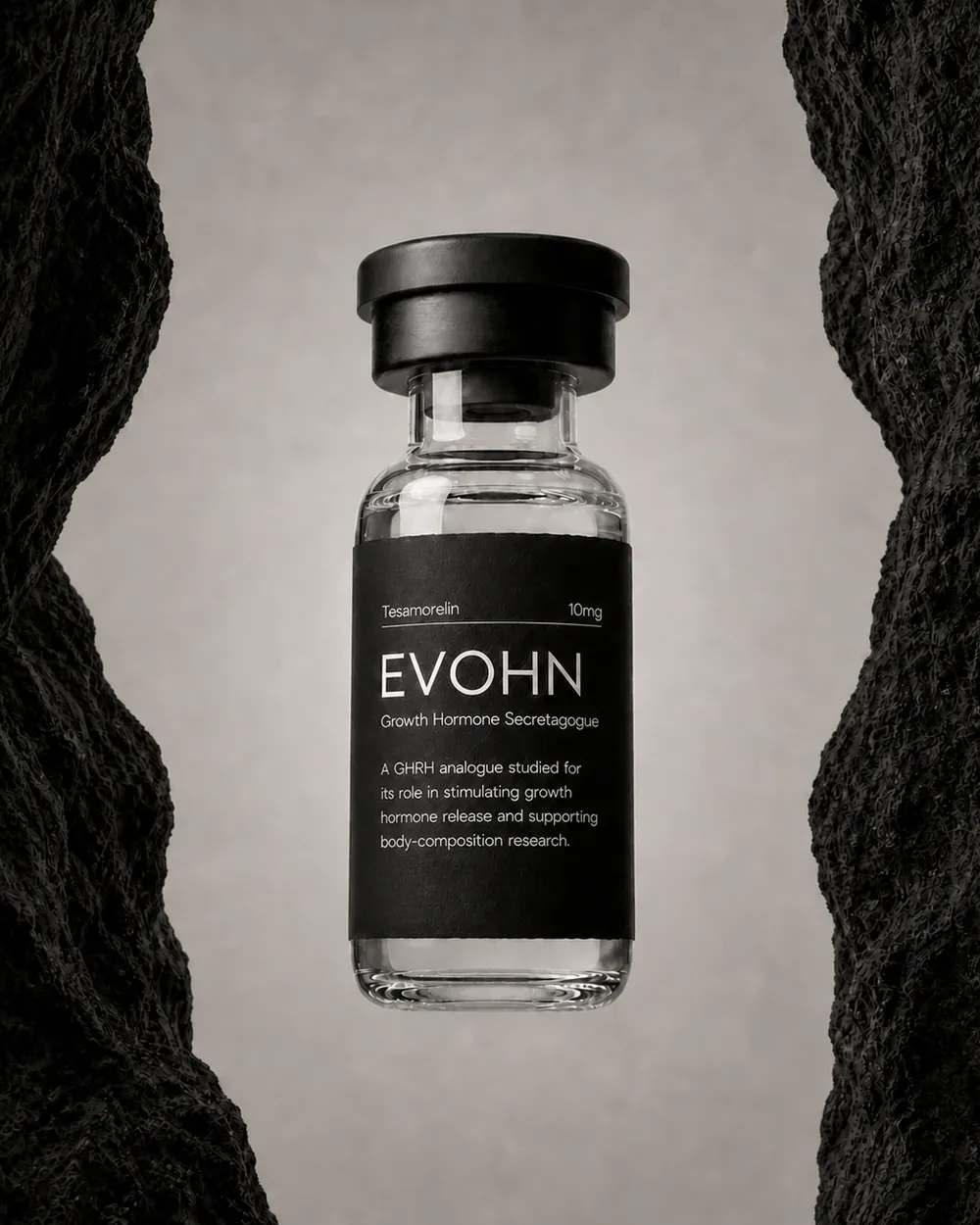
- TesamorelinContrasted where metabolic and somatotropic routes to substrate handling are compared.
Included in research stacks
Molecular & pharmacokinetic data
The physical record
Verify every figure against the certificate of analysis for the batch you hold. Where the label and the assay disagree, the assay is the number to calculate from.
- CAS number
- 2381089-83-2
- Molecular formula
- C₂₂₁H₃₄₂N₄₆O₆₈
- Molar mass
- ≈ 4731.40 g/mol
- Reported half-life
- ≈ 144 h (reported)
- Solubility
- Soluble in bacteriostatic water and sterile saline
Analytical record
Batch EVN-RETA-2605
Analysed by Northgate Bioanalytical, ISO/IEC 17025 accredited, under accession NGB-26-0552. The certificate is retrievable from the issuing laboratory independently of us.
Full certificate- Purity
- 99.38%RP-HPLC, UV 214 nm · spec ≥ 99.0%
- Identity
- 4731.6 Da (theoretical 4731.4)ESI-MS · spec Conforms to theoretical mass
- Assayed content
- 98.7% of labelRP-HPLC against reference standard · spec 95.0 – 110.0% of label
- Water content
- 4.6%Karl Fischer titration · spec ≤ 8.0%
- Residual solvents
- Acetonitrile 131 ppm; TFA 84 ppmHeadspace GC-FID · spec Within USP <467> limits
- Appearance
- White to off-white lyophilised cakeVisual inspection · spec Conforms
Storage
Store lyophilised at −20 °C, protected from light and moisture. Following reconstitution, hold at 2–8 °C and use within the interval stated on the batch certificate of analysis.
Handling
Allow the vial to reach ambient temperature before breaking the seal so atmospheric moisture does not condense onto the cake. Introduce diluent slowly against the vial wall rather than directly onto the powder, and swirl rather than shake. Avoid repeated freeze-thaw cycles; aliquot where a preparation will be drawn on more than once.
Packaging
Amber borosilicate vial with butyl stopper and aluminium crimp seal, presented in a matte debossed box with die-cut foam insert and magnetic closure.
Selected references
The published record
A starting point rather than a survey. Entries are listed for orientation and do not constitute endorsement of any interpretation drawn from them.
- 01A GIP/GLP-1/glucagon receptor triagonistNature Metabolism, 2022
- 02Glucagon receptor agonism and hepatic lipid fluxJournal of Hepatology, 2023
- 03Multi-receptor peptide design principlesPeptide Science, 2024
This catalogue is presented for informational purposes only. It is not an offer of sale, and it makes no medical or therapeutic claim.
You may also be studying
Enquiries
Request the batch documentation.
Ask a specialist about Retatrutide — its current batch, analytical documentation, and what can be supplied to your territory.